Bachelor’s/Master’s thesis projects:
Hyperspectral Survey of Insect Wings
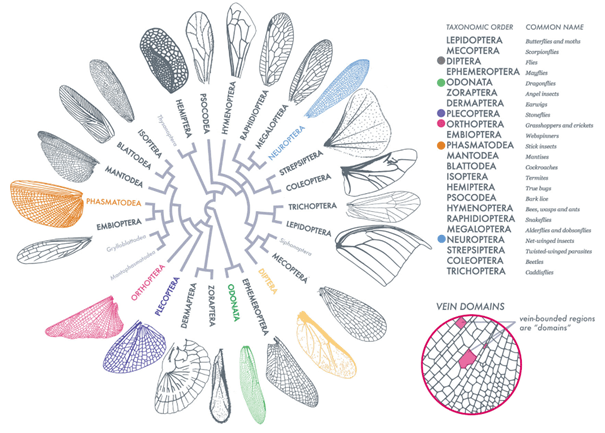
This thesis project will investigate the optical properties of insect wings using polarimetric hyperspectral imaging. The goal is to build a robust dataset from a wide variety of museum specimens, ensuring coverage of numerous insect orders, wing shapes, and sizes. This research will map complex optical properties (including backscatter, forward scatter, and polarization signals) to understand how they interact with light, focusing on parameters like taxonomic order, physical wing shape (morphology), size, and aspect angle. Using MATLAB for all data processing and analysis, the final objective is to develop a model correlating the measured optical signatures with these physical characteristics.
Ballistic Short Wave Infrared Small Animal Imaging with Super Continuum Light.

Our group develop tools for monitor insects and disease vectors. Infrared scattering is contributed by the entire body of small insects and its spectral components can be used to infer micro- and nano- features with applications for determining pathogens and age of disease vectors. In this project you will develop short wave infrared hyperspectral imaging for small animals. The project combine state of the art supercontinuum light sources, spatial modulation and CdHgTe Hyperspectral cameras. The project include experimental setup, in vivo image acquisition of tropical mosquitoes, spectral analysis and interpretation. You will learn important approaches whether you choose to pursue industrial or research career.
Development of Marine Lidar for Zooplankton Diversity

Our group develop laser diagnostic tools for our biosphere. In this thesis we aim to profile depth and capture oscillations from aquatic microorganisms in multiple wavelengths for the purpose of discriminating distinct species in marine environment. The project comprise optical design, raytracing, CADing and 3D printing, multivariate calibration and in situ tests of a marine lidar. The technique can shed important light on aquatic ecology with applications for aquafarming. A success project can lead to industrial collaboration for commercialization.
Hierarchical Clustering in the Complex Plane. Applications for Classification Insects in situ.

Do you like complex numbers but haven’t found any use for them? Look no further 😀 Our group develop new rapid tools for monitoring insect diversity in situ. We can collect millions of oscillatory signals from free flying insects and are currently developing computational methods to estimate species richness. You will work on a data set with hundreds of thousand entomological lidar observation and employ computational methods with as multidimensional statistical modes in time- and frequency domain, fundamental tone estimation and hierarchical cluster analysis in the complex plane. Your methods will take bioacoustics and species classification to the next level beyond power spectra. Successful thesis work can lead to continuation in our research group.
Butterflies in Near Infrared
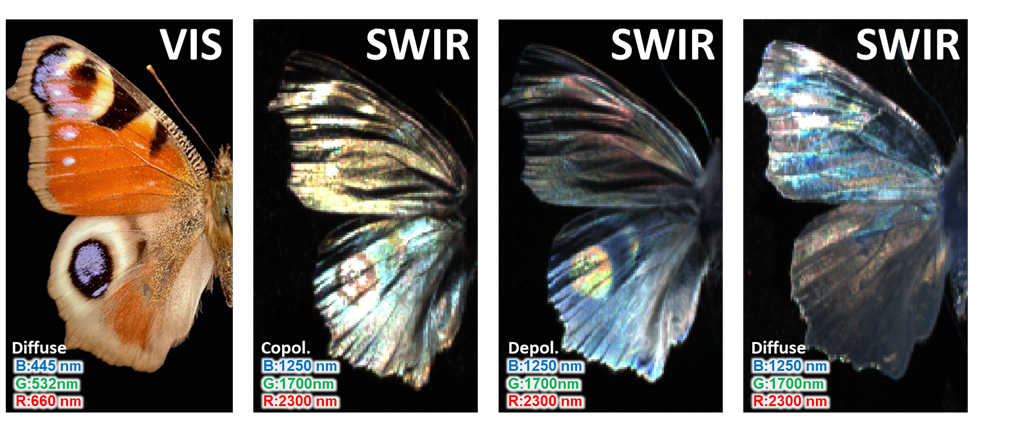
This thesis involves analyzing ex-vivo SWIR hyperspectral data of 75 butterflies, representing 36 species from the Skåne region. You’ll study reflectance changes from both dorsal and ventral sides in various polarizations, aiming to determine if each species exhibits a unique reflectance spectrum. The goal is to see if we can parameterize these reflectances into distinct values that significantly differ between species, potentially enabling remote identification of butterflies using infrared optical sensing.
 Biophotonic Sensing Group